
What Is Progression Fantasy? A Guide to the Genre, Its Tropes, and the Best Books to Start With
Progression Fantasy: The Genre Where Power Has to Be Earned
In fantasy, heroes often grow stronger. They face trials, mature, find a sword, learn magic, meet a mentor, lose, return, and ultimately win. But in Progression Fantasy, a character’s growth is not simply part of the story. It is the engine that drives it.
Readers open these books not only to ask, “Will the hero win?” A much more important question is: how will they become stronger? What skill will they master? What mistake will they correct? What new level of power will they unlock? How will their understanding of magic, combat, the world, and themselves change?
That is exactly what makes Progression Fantasy so addictive. The genre turns character development into something visible, almost tangible. The protagonist does not simply “get better.” We see exactly how it happens: through training, defeat, analyzing enemies, developing new techniques, strengthening a magical core, gaining levels, classes, ranks, artifacts, spells, discipline, or strategic insight.
Andrew Rowe, one of the authors closely involved in defining the term, described Progression Fantasy as fiction about characters who are “increasing in power and skill over time.” He also emphasized that such stories often feature characters training, learning new techniques, improving their skills, studying their opponents’ abilities, or gaining literal or figurative “levels” of power.
But that is only the basic definition. The genre’s real appeal goes deeper: Progression Fantasy gives readers the satisfaction of watching power being earned.
What Is Progression Fantasy?
Progression Fantasy is a subgenre of fantasy in which the gradual growth of a protagonist’s power, skill, knowledge, or capabilities plays a central role.
These stories usually feature a clearly understandable progression system. It may involve a magical academy, character levels, cultivation stages, combat ranks, classes, core development, increasing attributes, mastering techniques, unlocking new spells, or even accumulating knowledge inside a time loop.
The point is not simply that the hero becomes powerful. What matters is that the reader understands the path they took to get there, why their new abilities were earned, and what exactly changed between the opening and final chapters.
A useful test for the genre might look like this: if the version of the protagonist from Book Three could easily defeat their Book One self, and the Book Five version could do the same to their Book Three self, you are probably reading Progression Fantasy. Andrew Rowe has suggested a similar test: later versions of the central character should be meaningfully more capable than earlier ones.
This is what separates the genre from ordinary coming-of-age fantasy. In traditional epic fantasy, characters may also change, but their development is not always expressed through a system of power. They may become wiser, braver, or more morally mature. Progression Fantasy can include all of that too, but it adds another layer: measurable, or at least clearly observable, increases in capability.
Why Is Progression Fantasy So Addictive?
The genre has an extremely powerful emotional mechanism. It gives readers a particular kind of satisfaction: watching weakness turn into competence.
At the beginning, the protagonist may be nobody. They may have no power, status, knowledge, allies, or even the right to stand beside the strongest people in their world. But step by step, they learn. Sometimes slowly. Sometimes painfully. Sometimes through humiliation, defeat, and the near-total destruction of who they used to be. Yet every stage matters.
Readers receive several kinds of satisfaction at once.
First, there is the satisfaction of growth. We watch the protagonist become more effective. They understand the world better, make decisions faster, fight more dangerously, and use magic with greater sophistication.
Second, there is the satisfaction of systems. Good Progression Fantasy is almost always built around rules. Even when those rules are not presented as game statistics, they can still be felt. There are levels of power. There are limitations. Progress has a cost. There are ways to break through ceilings.
Third, there is the satisfaction of an earned reward. When the protagonist gains a new ability or defeats an enemy, we remember what they had to sacrifice to reach that point. The victory does not feel accidental. It feels like the result of a journey.
Finally, Progression Fantasy works exceptionally well in long-running series. Each volume can represent another step upward: a new rank, a new school, a new region, a new kind of enemy, or a deeper layer of the system. That is why the genre fits multi-book sagas so naturally.
The Main Markers of Progression Fantasy
Not every book in which the protagonist learns something qualifies as Progression Fantasy. For the genre to truly work, a story usually contains several recognizable elements.
1. Visible Growth in Power
By the end of the book, the protagonist should not merely be “more experienced.” They should be clearly stronger, more dangerous, or more capable than they were at the beginning.
2. A Clear Progression System
This may involve levels, ranks, magical circles, cores, classes, attributes, techniques, schools, skills, or another structured logic of advancement.
3. Training and Optimization
The protagonist often analyzes their weaknesses, searches for unconventional solutions, experiments with abilities, and learns how to use available resources more effectively than others.
4. Powerful Opponents as the Next Ceiling
Enemies in Progression Fantasy often represent the next level of growth. They are not merely obstacles. They demonstrate what the protagonist might become — or what they will eventually need to surpass.
5. Breakthrough Moments
One of the genre’s defining emotional highs is the moment when the protagonist reaches a new level. They understand a principle, unlock a technique, break through a limitation, or transform their body, mind, or magical structure.
6. An Expanding World
The stronger the protagonist becomes, the larger the world grows. What looked like the absolute pinnacle in Book One may later turn out to be only the lowest rung on a much greater ladder.
Progression Fantasy, LitRPG, Cultivation, Wuxia, and Xianxia: What Is the Difference?
Progression Fantasy frequently overlaps with other genres. This is why it is sometimes confused with LitRPG, GameLit, cultivation fantasy, wuxia, or xianxia.
LitRPG features game mechanics such as levels, interfaces, classes, stats, quests, system messages, experience points, and skills. LitRPG is often also Progression Fantasy because the protagonist is continuously leveling up. But Progression Fantasy does not have to be LitRPG. It can have no interface, numbers, or literal “system” at all while still making growth in power the central narrative element. Andrew Rowe has specifically noted that Progression Fantasy overlaps with LitRPG, GameLit, xianxia, and shonen battle manga without necessarily belonging to all of those categories.
Cultivation Fantasy focuses on cultivation: the development of internal energy, the body, spirit, core, meridians, martial techniques, or spiritual power. Growth is often divided into stages: disciple, master, elder, immortal, celestial being, and so on. Cultivation Fantasy is almost always a form of Progression Fantasy.
Wuxia is generally associated with martial arts, schools, clans, duels, codes of honor, masters, and disciples. Xianxia goes further, into immortality, heavenly laws, spiritual realms, cultivation, and almost godlike levels of power. Many modern Western fantasy novels borrow these elements while adapting them to pacing, structure, and storytelling conventions more familiar to English-language readers.
The important point is that Progression Fantasy is not a setting. It does not have to take place in a magical academy, it does not require Eastern martial arts, and it does not need an RPG system. Above all, it is a promise to the reader: the protagonist will grow, and that growth will matter to the story.
Standout Examples of the Genre
Cradle by Will Wight
Will Wight’s Cradle series is one of the defining works of modern Progression Fantasy. It is frequently cited as one of the series that helped Western readers embrace xianxia- and cultivation-inspired progression in a more accessible form. In his brief history of the genre, Andrew Rowe specifically noted that Unsouled, the first Cradle novel, helped popularize xianxia in Western fiction and inspired many later works.
Why is Cradle so important to the genre?
Because it demonstrates the progression ladder almost perfectly. The protagonist begins at the bottom of a world where strength determines status, safety, and opportunity. From there, he gradually advances through training, mentors, defeats, new techniques, and increasingly powerful levels of conflict.
The markers of Progression Fantasy are especially clear here: cultivation, defined power ranks, constant escalation in scale, and a weak protagonist forced to compensate for his disadvantages through intelligence, persistence, and unconventional solutions.
Arcane Ascension by Andrew Rowe
Arcane Ascension matters not only as a series, but also as part of the discussion around the term Progression Fantasy itself. Andrew Rowe was one of the authors who helped establish the label within the English-language fantasy community.
Where Cradle focuses more heavily on cultivation and martial advancement, Arcane Ascension is closer to magical academies, trials, dungeons, and the systematic study of magic. Rowe himself has written in his FAQs that readers who enjoy magical schools and deeply developed magic systems may want to begin with Arcane Ascension.
This represents another kind of Progression Fantasy: not just “become stronger,” but also “understand how the system works.” The logic of magic, its limitations, tactical thinking, and the ability to exploit rules more effectively than others are especially important here.
Mother of Learning by Domagoj Kurmaić / nobody103
Mother of Learning demonstrates another form of Progression Fantasy: advancement through knowledge.
The protagonist becomes trapped in a time loop. The same month repeats again and again, but his experience, understanding, and skills remain with him. Royal Road describes the premise as Zorian finding himself trapped in a time loop with no obvious way out, forcing him to uncover the mystery while dealing with very real threats hidden around him.
The story’s central phrase is almost a manifesto:
“Repetition is the mother of learning.”
Unlike stories where progress is measured primarily in raw power levels, Mother of Learning makes knowledge the main resource. The protagonist becomes more dangerous not because he receives a new sword during every cycle, but because he understands the world better. He knows what will happen. He studies magic. He analyzes people. He tests hypotheses. He turns repetition into a tool for advancement.
This is an important example for understanding the genre: Progression Fantasy is not always about muscles, numbers, and combat ranks. Sometimes it is about turning intelligence into a form of power.
Dungeon Crawler Carl by Matt Dinniman
Dungeon Crawler Carl is best understood as a major example at the intersection of LitRPG, GameLit, dungeon crawl fiction, and Progression Fantasy. It may not be “pure” Progression Fantasy in the narrowest sense, but it is impossible to ignore: the series has become one of the most prominent phenomena in the modern LitRPG space.
According to the Times Union, the series began as a self-published story in 2020, quickly developed a strong digital and audiobook following, and had its print rights acquired by Penguin Random House in 2024. The publication also reported that by 2026, the first seven books had sold more than six million copies, while almost every release had appeared on The New York Times lists in either audio fiction or hardcover categories.
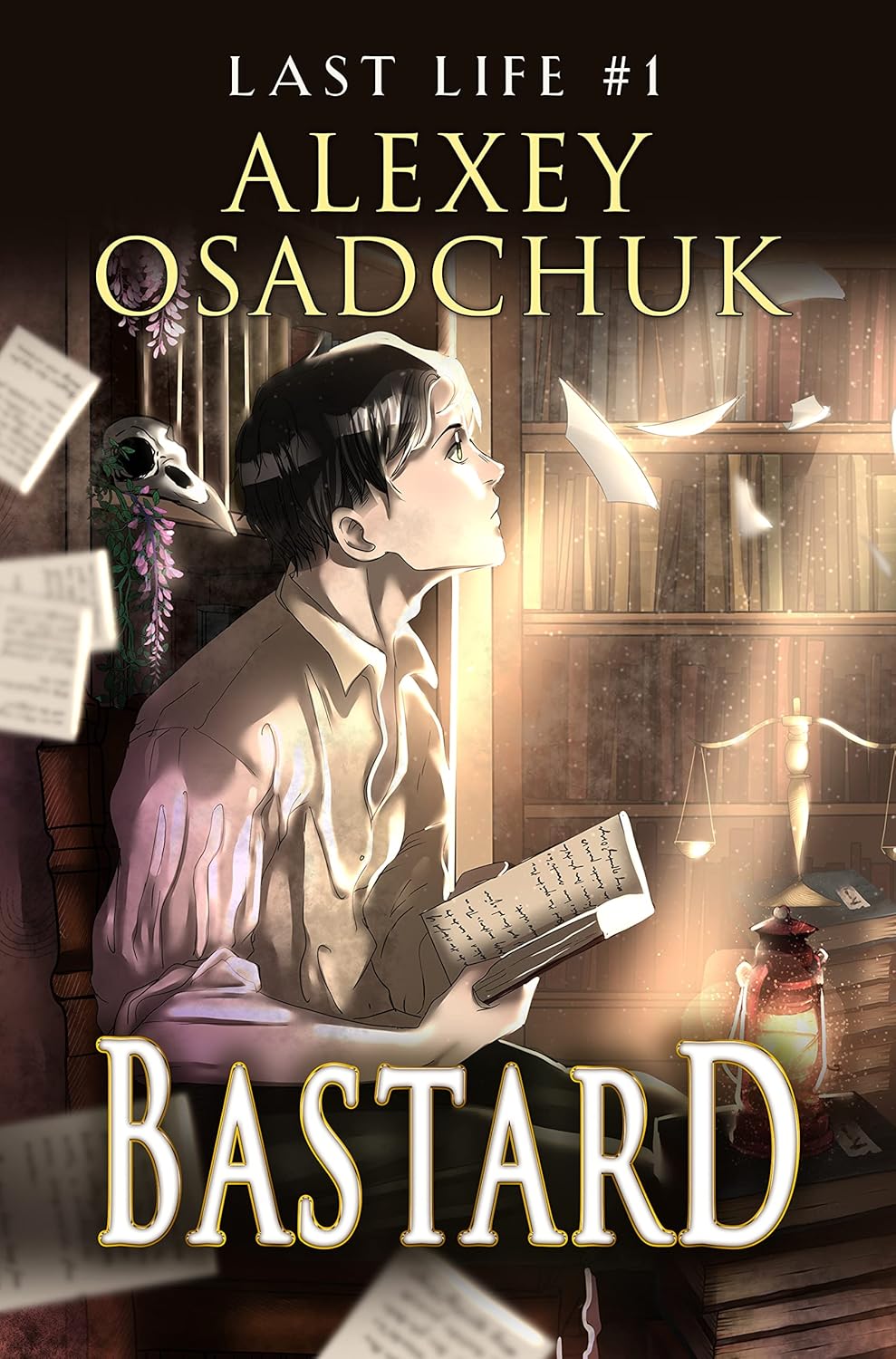
Last Life
Alexey Osadchuk’s Last Life combines several genres at once: Fantasy, Wuxia, Cultivation, and Progression Fantasy. It is a strong example of how cultivation and progression elements can be combined with a second-chance narrative.
The protagonist does not simply begin a new life. He enters a world where strength, status, birth, and the ability to survive determine almost everything. From a Progression Fantasy perspective, the external intrigue is only part of the appeal. Just as important is the logic of the protagonist’s rise: he must rebuild his position in a dangerous world where every new level of capability reveals new threats.
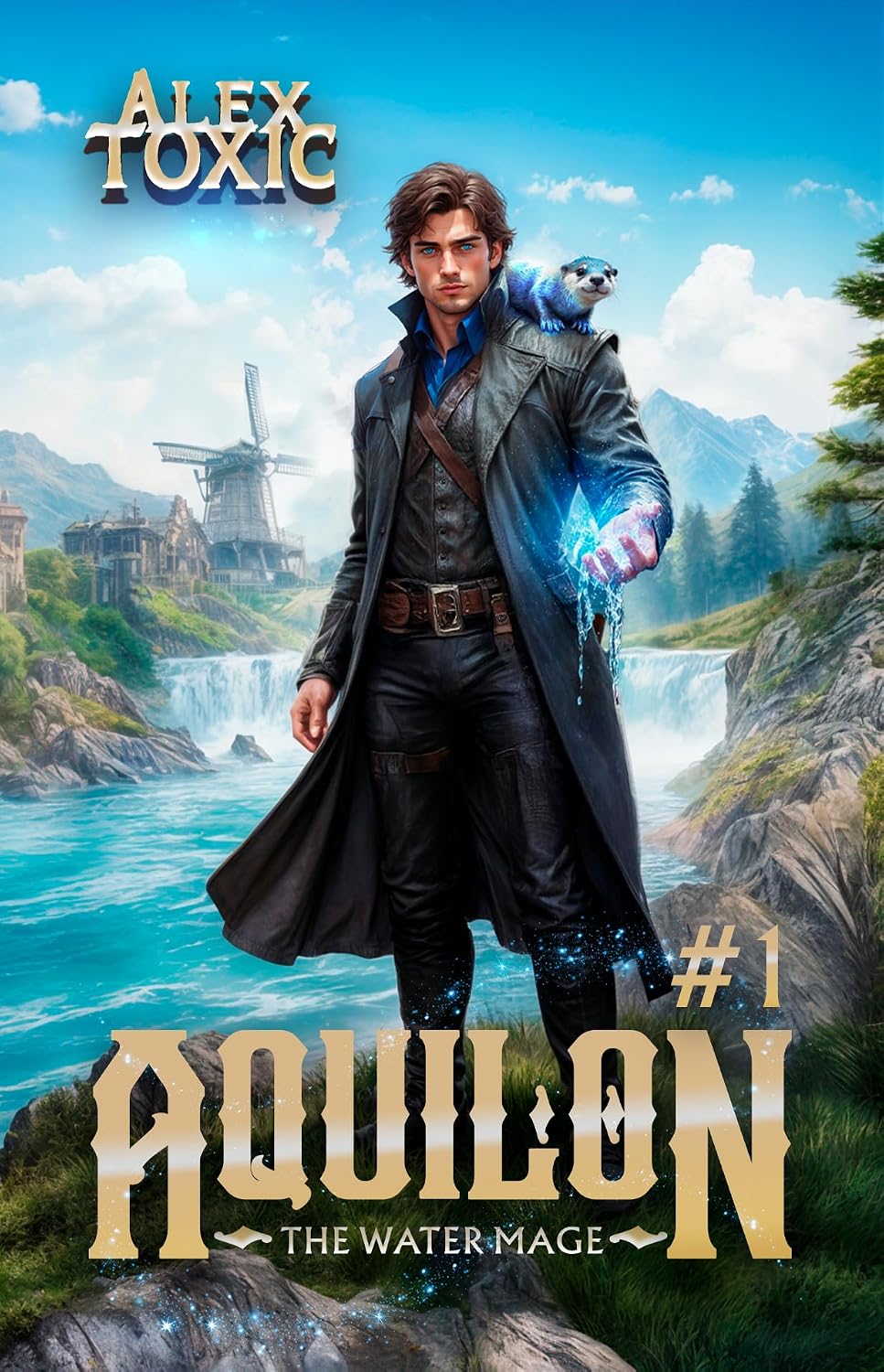
Aquilon: The Water Mage
Alex Toxic’s Aquilon: The Water Mage can be classified as Historical Portal Progression Fantasy, Progression Fantasy Historical, and Historical Progression Fantasy.
It represents an interesting branch of the genre: Progression Fantasy not in a purely “game-like” or cultivation-driven form, but through a historical portal-fantasy framework. Here, the protagonist’s growth is connected not only to personal power, but also to the collision of different eras, knowledge systems, and magic.
This type of story demonstrates particularly well that progression does not always have to be strictly vertical — “the hero becomes stronger.” It can also be civilizational: a protagonist brings knowledge, a system of thinking, or a form of power that does not fit naturally into the new world.
The Hunter’s Code

The Hunter’s Code by Yuri Vinokurov and Oleg Sapphire can be described through several genre labels: Progression Fantasy Portal, Progression Fantasy Wuxia, and Progression Fantasy.
It is also a good example of the long-form series structure that works especially well for Progression Fantasy. Readers are not simply following a single adventure. They are watching successive stages in the development of both the protagonist and the world. Each new book can become another rung on the ladder.
Where Should You Start With Progression Fantasy?
If you are discovering the genre for the first time, it is better to choose not simply “the most famous book,” but the type of progression that appeals to you most.
If you enjoy cultivation, power ranks, and the journey from a weak disciple to almost unimaginable levels of strength, Cradle is an excellent starting point. From there, you can explore Wuxia and Cultivation series such as Last Life, Law of the Jungle, The Edges of Power, and The Flame of the North.
If you are interested in magic systems, academies, trials, and the rational use of clearly defined rules, Arcane Ascension, Gakko Academy, and other Portal Progression Fantasy series can be excellent entry points.
If you prefer stories where the main resource is not brute strength but knowledge, strategy, and repetition, take a look at Mother of Learning. It demonstrates how Progression Fantasy can work through intelligence, memory, and accumulated experience.
And if you enjoy RPG mechanics, levels, classes, dungeons, and deadly challenges, the intersection between LitRPG and Progression Fantasy may be the best place to start. Dungeon Crawler Carl, along with other LitRPG and Wuxia series, fits naturally into this space.
Why Does Progression Fantasy Work So Well in Series?
Progression Fantasy almost seems designed for long-running series.
In a traditional standalone novel, the protagonist usually has to complete their character arc within a single book. In Progression Fantasy, the journey can be longer and more layered: Book One may focus on survival, Book Two on the first real level of power, Book Three on confronting the system itself, Book Four on moving beyond the boundaries of the old world, and Book Five on an entirely new scale of threats.
The genre gives authors a natural structure for a series. Each book can answer the question: what new ceiling must the protagonist break through this time?
But there is also a risk. If progression becomes too mechanical, readers may stop seeing a story and start seeing a spreadsheet of upgrades.
Good Progression Fantasy never forgets that power is not interesting on its own. It matters when it changes the protagonist’s choices, relationships, and place in the world.
The ideal form of growth in this genre is not simply “+10 Strength.” It is the moment when a protagonist becomes someone capable of doing what was previously impossible.
Why Has the Genre Become So Popular?
The rise of Progression Fantasy is not driven by fantasy alone. The genre has been shaped by video games, tabletop RPGs, manga, anime, web serials, and a broader culture of long-form serialized storytelling.
Dungeons & Dragons helped establish the idea of adventure as a system as far back as the 1970s: heroes defeat monsters, gain treasure and experience, and advance to new levels. In his history of the genre, Andrew Rowe notes that this logic of levels and experience influenced LitRPG and many other forms of progression-based fiction.
Manga and anime, especially shonen battle series, introduced another important convention: protagonists become stronger through training, defeat, tournaments, and new forms of power. Cultivation and xianxia added spiritual ranks, clans, sects, heavenly laws, and seemingly endless ladders of advancement.
Modern Progression Fantasy brings these influences together in a format that works particularly well for readers who enjoy long series, understandable systems, strong momentum, and the feeling that every chapter brings the protagonist closer to the next breakthrough.
The Core of Progression Fantasy: Power Must Be Earned
At the heart of Progression Fantasy lies a simple but powerful idea: strength should be earned.
The protagonist may be talented, chosen, or transported to another world. They may receive a system, a rare gift, a second life, or access to forbidden knowledge. But when the genre works properly, the gift alone is never enough.
The protagonist must understand how to use it. Pay the price. Survive defeat. Find their own path.
That is why Progression Fantasy connects so strongly with readers. We are not only reading about magic, battles, and fantastical worlds. We are reading about the process of becoming.
About the weak becoming strong.
About the inexperienced becoming masters.
About someone who had no chance slowly creating one for themselves, step by step.
That is the true magic of the genre.
Looking for a place to start? The Magic Dome Books catalog features many different forms of Progression Fantasy, including Wuxia, Cultivation, LitRPG, Portal Fantasy, and historical series where the protagonist’s growth becomes the driving force of the story.