
What Is Wuxia? A Beginner’s Guide to the Martial Arts Fantasy Genre
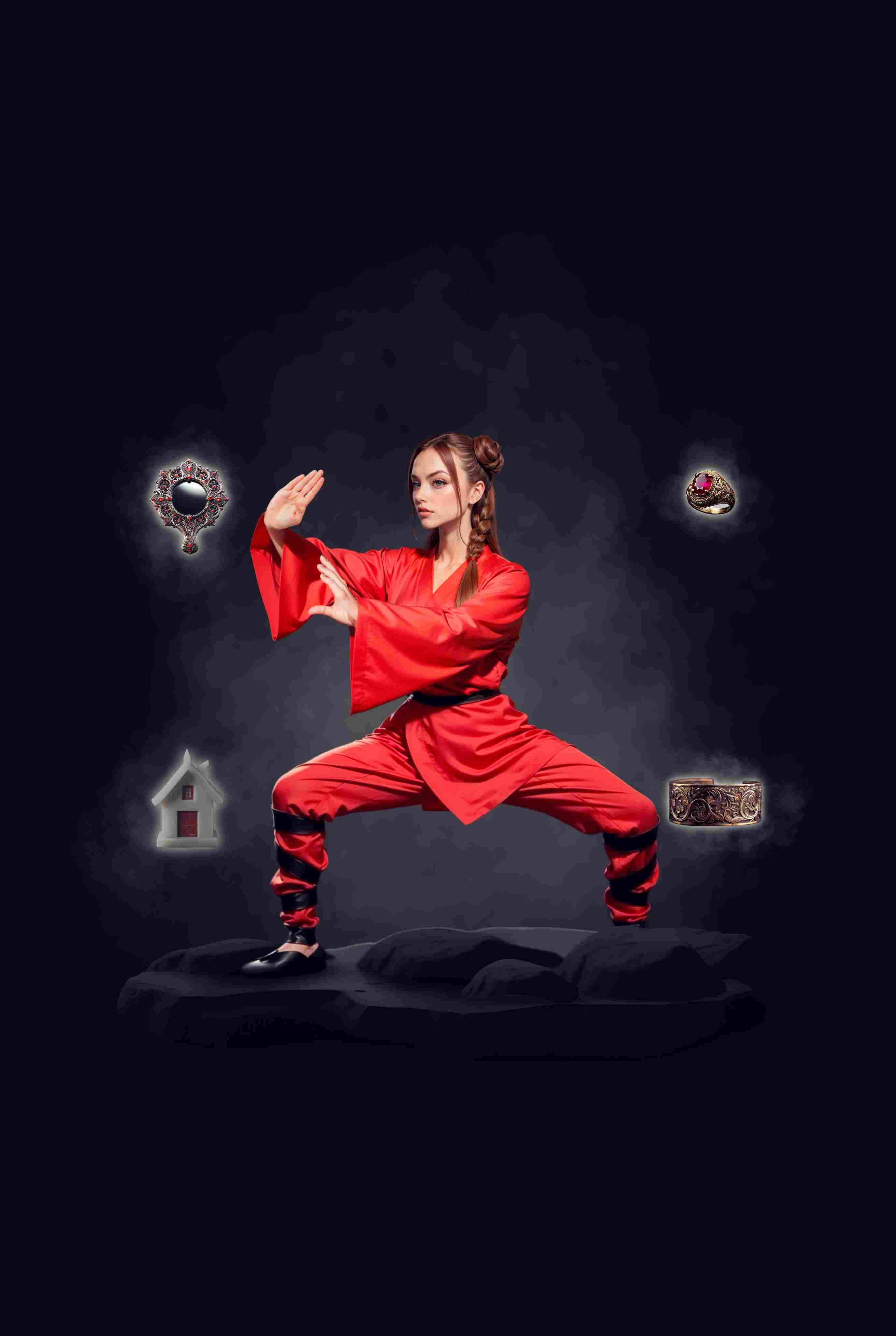
Wuxia: Where Martial Arts Become a Way of Life
A lone swordsman walks into an inn. He says little. Around him sit merchants, travelers, perhaps a government official or two—and several people who are not quite what they seem.
Someone recognizes the emblem on his sword.
The room goes silent.
A moment later, tables are overturned, blades flash, and two martial artists move with a speed no ordinary human could hope to match. One may leap onto a rooftop, balance on a bamboo branch, or strike an opponent with a technique learned from a master whose name is famous throughout the martial world.
But the fight itself is only part of the story.
Who taught the swordsman? Which school does he belong to? What oath did he swear? Who did his master offend twenty years ago? Is his enemy truly a villain—or simply a man obeying a different code of honor?
Welcome to wuxia, one of the great traditions of Chinese popular fiction.
For readers discovering the genre through fantasy novels, web fiction, games, movies, or television dramas, wuxia can initially look like “fantasy with kung fu.” That description is not entirely wrong, but it misses what makes the genre special.
Wuxia is not simply about martial arts.
It is about martial heroes.
What Is Wuxia?
The Chinese term wuxia (武侠) combines two ideas: wu, associated with martial or military skill, and xia, the chivalrous hero. In its broadest sense, wuxia is fiction about martial artists whose adventures unfold within—or alongside—the social world of historical China. It is commonly described as a form of Chinese martial-arts fiction or low fantasy.
Its heroes may possess abilities that stretch the limits of realism. They can move with extraordinary speed, leap astonishing distances, manipulate internal energy, survive seemingly impossible wounds, and master techniques with names that sound almost magical.
Yet traditional wuxia usually remains fundamentally human.
The protagonist does not normally seek to become a god. The goal is not necessarily immortality or ascension to a higher plane of existence. Instead, power is rooted in martial discipline, internal strength, training, secret techniques, exceptional talent, and years of practice.
And just as important as strength is the question of how that strength should be used.
A great martial artist who terrorizes the weak may be powerful, but he is not necessarily xia. A comparatively weaker fighter who risks everything to defend someone who cannot defend themselves may embody the heroic ideal far more completely.
That tension between power and morality lies at the heart of much wuxia.
Welcome to the Jianghu
To understand wuxia, you need to understand one word: jianghu (江湖).
Literally, the characters mean “rivers and lakes,” but in wuxia the term refers to something much larger: a parallel social world inhabited by martial artists, wandering heroes, schools, clans, masters, assassins, bandits, secret societies, healers, criminals, and other people who live partly outside ordinary society.
The emperor may rule China.
A magistrate may rule a city.
But neither necessarily rules the jianghu.
The jianghu has its own hierarchies, grudges, alliances, debts, reputations, and unwritten laws. A martial school might command enormous respect. A legendary swordsman may possess more practical authority than a government official. An insult delivered decades ago can ignite a feud between clans. A stolen martial manual may be worth killing hundreds of people for.
Closely connected to jianghu is wulin (武林)—literally the “martial forest”—which refers more specifically to the community of martial artists.
This creates one of wuxia's most appealing qualities: its heroes often live between worlds.
They may encounter emperors, soldiers, peasants, merchants, and officials, but they also belong to another society whose rules ordinary people barely understand.
For Western fantasy readers, the jianghu can feel simultaneously like a network of knightly orders, criminal underworlds, rival magical schools, mercenary companies, and ancient noble houses.
Except everyone knows kung fu.
The Main Markers of Wuxia
Not every story containing martial arts is wuxia. The genre has evolved enormously, and modern books frequently mix wuxia with Progression Fantasy, cultivation, portal fantasy, LitRPG, and other traditions. Still, several elements appear again and again.
1. Martial Arts Are More Than Fighting
In wuxia, martial arts are often a language of their own.
A person's technique can reveal their teacher, school, philosophy, experience, or even personality. Masters develop signature styles. Schools preserve techniques across generations. Manuals containing lost knowledge become priceless treasures.
Learning a new technique can therefore mean much more than acquiring another way to punch someone.
It can mean inheriting a legacy.
2. Schools, Clans, Masters, and Disciples
Wuxia worlds are built around relationships.
Who taught you?
Who taught your teacher?
Which school do you represent?
Who are your martial brothers and sisters?
These questions can matter almost as much as who your biological family is.
The relationship between master and disciple is particularly important. Training can create loyalty lasting a lifetime—and betrayal of a master can become one of the most serious moral transgressions imaginable.
3. Honor, Loyalty, and Revenge
Wuxia heroes constantly encounter obligations.
A murdered master must be avenged. A promise must be kept. A debt must be repaid. A friend must be protected. An injustice cannot simply be ignored because intervening would be inconvenient.
Of course, different characters interpret these obligations differently.
And that is where the story becomes interesting.
What happens when loyalty to your school conflicts with friendship? What if your master was wrong? What if revenge requires becoming exactly like the person you hate?
Wuxia repeatedly places its heroes between competing duties.
4. Extraordinary but Recognizable Human Power
Wuxia martial artists are rarely realistic by ordinary standards.
They may possess incredible reflexes and strength, use internal energy, perform seemingly impossible feats of movement, or defeat groups of ordinary fighters single-handedly.
The famous English-language description of Jin Yong's A Hero Born captures the idea wonderfully: it presents ancient China as a world where “kung fu is magic.”
But there is usually still a ceiling.
That ceiling becomes especially important when distinguishing wuxia from its close relative, xianxia.
5. Secret Techniques and Martial Manuals
Knowledge is power in the most literal possible sense.
A forgotten sword style, forbidden technique, legendary manual, special breathing method, or unique form of internal training can transform the balance of power in the jianghu.
As a result, wuxia stories frequently revolve around the pursuit of knowledge.
And because knowledge can be stolen, hidden, misunderstood, or deliberately falsified, the search for greater martial power easily becomes an adventure in itself.
6. The Wandering Hero
One of wuxia's most enduring images is the wandering martial artist.
They travel from town to town, become entangled in local conflicts, meet strangers whose identities are not what they seem, discover conspiracies, challenge corrupt powers, and repeatedly find themselves forced to decide whether someone else's problem should become their own.
Sometimes the sensible answer would be “no.”
Fortunately for readers, wuxia protagonists are not always sensible.
Wuxia, Xianxia, and Cultivation: What Is the Difference?
This is probably the most common source of confusion for newcomers.
Wuxia and xianxia share a great deal of visual and narrative vocabulary: martial arts, sects, masters, disciples, internal power, rival schools, legendary techniques, ancient settings, and characters capable of extraordinary feats.
But the scale is different.
Wuxia is fundamentally concerned with martial heroes. Its strongest characters may appear superhuman, but they generally remain human.
Xianxia pushes the same broad tradition toward mythology and transcendence. Cultivation may extend life, transform the body and soul, allow characters to advance through supernatural realms, battle demons, challenge heavenly laws, and ultimately pursue immortality itself. Modern genre guides commonly draw the distinction along precisely this human-versus-transcendent axis.
Cultivation Fantasy, meanwhile, focuses especially on the process of becoming stronger through structured development: refining internal energy, improving the body, opening meridians, developing a core, mastering techniques, and advancing through stages or realms.
The boundaries are not rigid.
A novel can begin with something very close to traditional wuxia and gradually move into cultivation or xianxia territory. Modern fantasy—especially web fiction and Progression Fantasy—loves mixing these traditions.
A useful beginner's rule is:
Wuxia asks: How great a martial hero can a human become?
Xianxia asks: How far can someone go beyond being human?
Why Does Wuxia Work So Well With Progression Fantasy?
For modern fantasy readers, this is where things become especially interesting.
Wuxia existed long before anyone used the term Progression Fantasy. But the two genres fit together remarkably well.
Why?
Because martial arts naturally provide a structure for growth.
A beginner becomes a disciple. A disciple learns techniques. Techniques require control of the body and internal energy. Stronger opponents reveal weaknesses. Masters demonstrate previously unimaginable levels of skill. Defeat becomes a lesson. Training produces visible results.
The reader always has another mountain to look toward.
That makes wuxia an excellent foundation for modern Progression Fantasy. A contemporary author can take the schools, martial techniques, rivalries, internal power, and philosophy of wuxia and combine them with a much more explicit progression ladder.
The result preserves the romance of the martial world while adding the addictive question familiar to Progression Fantasy readers:
How strong can the protagonist become next?
Standout Examples of Wuxia
Legends of the Condor Heroes by Jin Yong
For many readers, the best introduction to classic wuxia is also its most famous name: Jin Yong, also known as Louis Cha.
His The Legend of the Condor Heroes was originally serialized in the late 1950s and became one of the foundational works of modern wuxia. The official English translation was published in four volumes beginning with A Hero Born.
The story follows Guo Jing, whose journey from an inexperienced young man toward becoming a great martial hero unfolds against a vast historical background of war, political conflict, loyalty, love, betrayal, and competing martial traditions.
It is an excellent introduction because so many elements now associated with wuxia are present in concentrated form: famous masters, rival martial styles, secret knowledge, extraordinary techniques, historical personalities, personal loyalties, and the question of what actually makes someone heroic.
Most importantly, Guo Jing's greatness is not simply a matter of becoming better at fighting.
His character matters.
That is pure wuxia.
The Book and the Sword by Jin Yong
Jin Yong's debut novel, The Book and the Sword, was first serialized in 1955 and later published in English by Oxford University Press.
The novel mixes martial adventure with history, secret societies, political conspiracy, questions of identity, and resistance to imperial power.
Its Red Flower Society seeks to overthrow the Qing government, placing martial heroes directly into a conflict between personal loyalty, political ideals, and historical forces.
This is another important feature of wuxia: the jianghu does not always remain separate from conventional society.
Sometimes martial heroes become entangled in the fate of an empire.
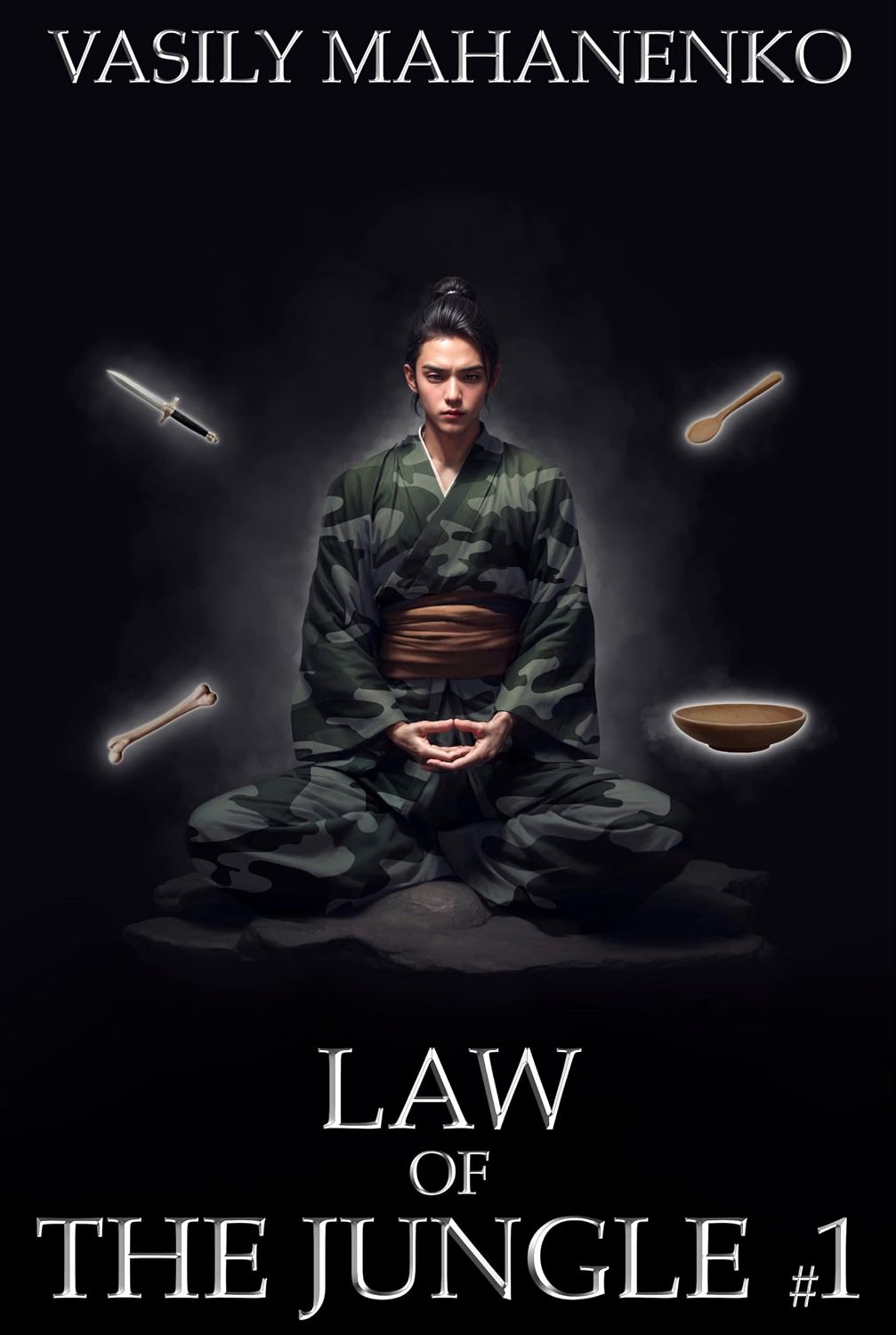
Law of the Jungle by Vasily Mahanenko
Modern wuxia does not have to reproduce historical China literally.
Vasily Mahanenko's Law of the Jungle demonstrates how wuxia can be combined with Progression Fantasy and transformed into a large-scale modern fantasy world.
Humanity has learned to harness Qi, divided the world into zones, and developed extraordinary artifacts while moving ever closer to immortality. But technological and spiritual advancement has not produced equality. Instead, it has reinforced a brutally simple principle:
Power grants privilege.
Those with strength gain resources, opportunities, and status. Those born at the bottom may never receive the chance to rise at all. The protagonist begins as an ordinary young man from the neglected zero zone, facing a world in which strength determines almost everything.
That makes the series particularly interesting from a wuxia perspective.
Traditional wuxia often asks what obligations come with martial strength. Law of the Jungle adds another question: what happens when an entire civilization organizes itself around that strength?
Qi, artifacts, social hierarchy, increasingly powerful opponents, demons, ancients, and the protagonist's climb from obscurity create a bridge between wuxia and modern Progression Fantasy. Magic Dome Books itself categorizes the series as Wuxia and, especially in its earlier volumes, Progression Fantasy.
For readers who enjoy the martial foundations of wuxia but want a much more explicit rise in power across a long-running series, this is a natural place to start.
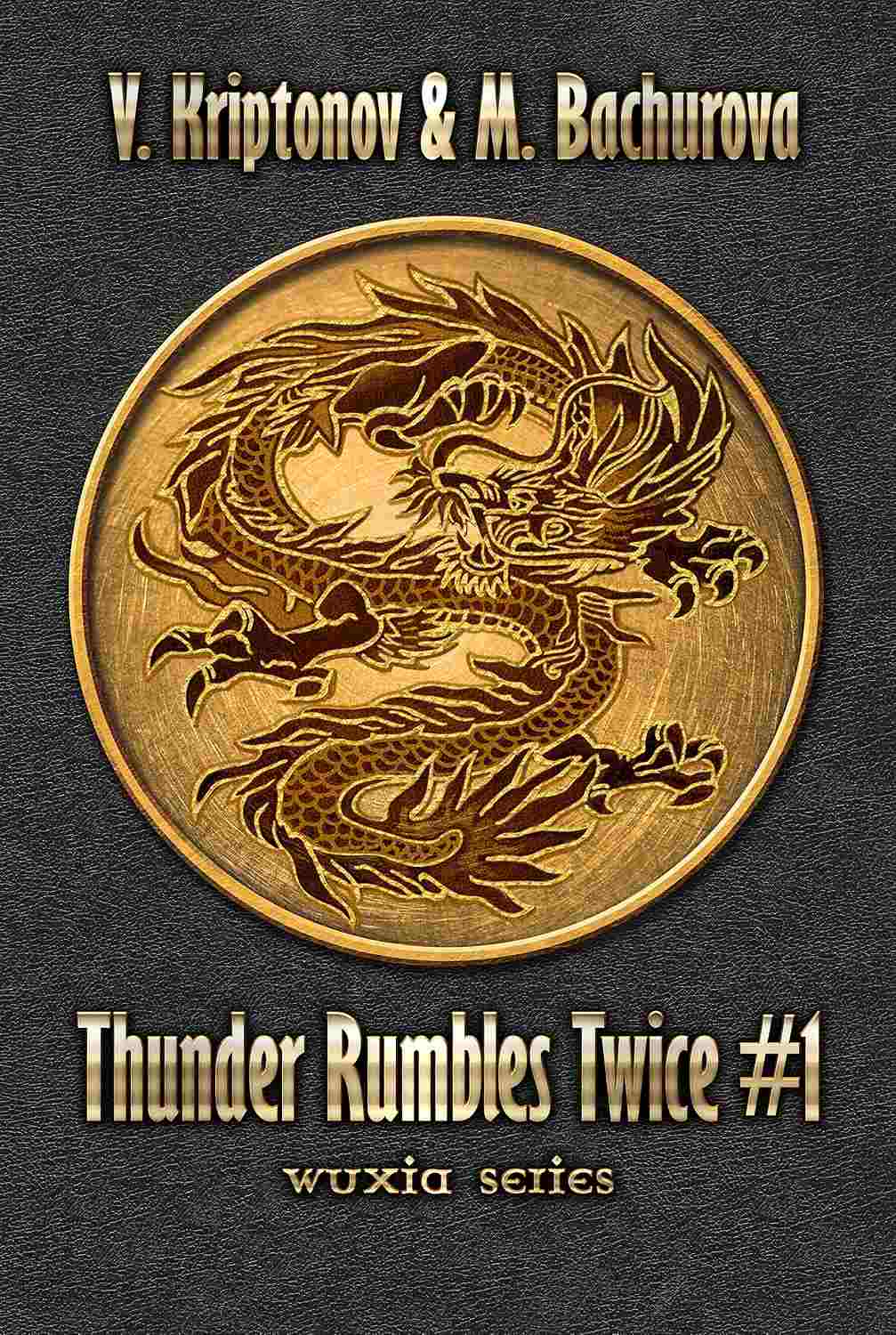
Thunder Rumbles Twice by Mila Bachurova and Vasily Kriptonov
Thunder Rumbles Twice approaches wuxia from another direction, combining it with cultivation and portal fantasy. Magic Dome Books categorizes the series accordingly as Wuxia, Cultivation, and Portal fiction.
Its protagonist has already lost almost everything: his family, his health, and his job. Revenge is the only purpose left to him, and he follows his enemy into another world with no possibility of returning.
There, he finds himself in the body of a teenager sold for debt to the School of Quan, controlled by the powerful Zhou clan.
He is now Lei—Thunder.
Immediately, many classic wuxia structures fall into place: the martial school, the clan hierarchy, training, rival fighters, masters, tournaments, hidden agendas, and the constant struggle to survive in a society where martial ability defines one's place.
But the portal-fantasy premise gives the familiar structure a different energy. Lei enters this society as both participant and outsider. He has to understand its rules while becoming strong enough to survive them.
By the second book, he has earned the right to become a fighter of the school and faces a tournament that is rapidly turning into a deadly political trap. Meanwhile, the Zhou clan itself is experiencing a struggle for power, and Lei begins to suspect that fighters are being deliberately sacrificed.
This is wuxia doing what wuxia does best: making every fight simultaneously personal, political, and martial.
A duel is rarely just a duel.
Where Should You Start With Wuxia?
The best entry point depends on what attracted you to the genre in the first place.
If you want to understand classic wuxia, start with Jin Yong's Legends of the Condor Heroes. A Hero Born introduces a world of masters, martial traditions, loyalty, war, revenge, and heroic ideals while remaining accessible in English translation. It is also frequently recommended as an entry point for newcomers to wuxia.
If you prefer modern Progression Fantasy, Law of the Jungle is a better bridge. It takes Qi, martial advancement, hierarchy, and the pursuit of strength and builds them into a world designed around progression.
If you enjoy portal fantasy, cultivation, schools, tournaments, revenge, and clan politics, Thunder Rumbles Twice offers a particularly direct route into the genre.
And once the basic vocabulary of wuxia becomes familiar, an enormous landscape opens up.
You begin to recognize why the identity of a master matters. Why a martial manual can start a war. Why two people meeting at an inn may already know each other's reputations. Why refusing a duel can sometimes be more consequential than accepting one.
The world acquires another layer.
You have entered the jianghu.
Why Wuxia Still Works
At first glance, wuxia seems to be about extraordinary people.
Legendary swordsmen. Impossible techniques. Masters capable of defeating dozens of opponents. Secret schools preserving knowledge unavailable to ordinary men and women.
But beneath all of that spectacle lies a surprisingly human question:
What should a person do when they have the power to act?
That is why strength alone never completely defines the wuxia hero.
Martial ability creates possibilities. Character determines what the hero does with them.
A person can pursue revenge or forgiveness. Loyalty or ambition. Justice or power. They can obey their master or question them. Protect their clan or challenge it. Follow the law or violate it because the law itself has become unjust.
And sometimes they simply wander down the road until someone else's trouble becomes impossible to ignore.
That combination of martial spectacle, adventure, personal growth, loyalty, philosophy, rivalry, and moral choice has kept wuxia alive through novels, films, television, comics, animation, and games. The genre has also proved remarkably adaptable, merging naturally with cultivation, xianxia, portal fantasy, LitRPG, and Progression Fantasy.
The weapons may change. The worlds may become stranger. The progression systems may become more elaborate.
But the essential fantasy remains wonderfully simple:
Somewhere beyond ordinary society lies another world—a world of masters and disciples, ancient grudges and impossible techniques, wandering heroes and legendary schools.
All you have to do is step into the jianghu.
Looking for a place to start? The Magic Dome Books catalog features many different forms of Progression Fantasy, including Wuxia, Cultivation, LitRPG, Portal Fantasy, and historical series where the protagonist’s growth becomes the driving force of the story.